On this page
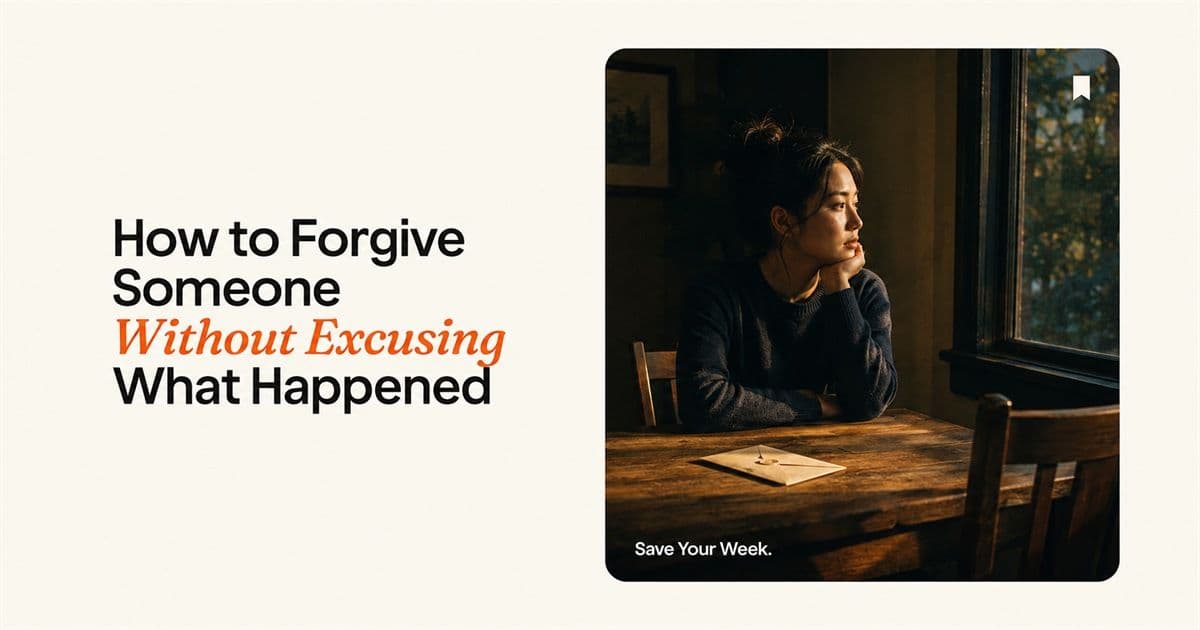
People often say you need to forgive and move on, as if forgiveness were a door you close once. The advice can feel especially cruel when the harm is still denied, repeated, or unsafe. Learning how to forgive without excusing starts by refusing that collapse.
How to forgive without excusing does not mean approval, forgotten evidence, restored trust, renewed access, or reconciliation. It can mean reducing the grievance's control over your present life while keeping the truth and your boundaries.
A meta-analysis of forgiveness interventions found benefits across the included studies, with longer interventions generally producing stronger effects. That supports forgiveness as a possible process. It does not prove that everyone should forgive, that a quick exercise is treatment, or that reconciliation is safe. The research also does not answer how to forgive without excusing when danger continues.
How to forgive without excusing: five decisions, not one word
How to forgive without excusing becomes clearer when forgiveness is not bundled with other choices:
acknowledgement: naming what happened and its impact;
accountability: deciding what responsibility belongs to whom;
boundary: limiting what can happen next;
reconciliation: rebuilding a relationship together;
forgiveness: changing how you carry the offence.
These can move at different speeds. You may forgive and never resume contact. You may reconcile slowly without feeling fully forgiving. You may decide forgiveness is not today's priority. That is still how to forgive without excusing when the word itself is under pressure.
Ask which decision you are actually making. Who is the release for? What are you releasing: the demand for a different past, daily rehearsal, revenge, or responsibility that was never yours? Where does the grievance return: in bed, at family events, in new relationships, or whenever a message arrives?
One peaceful thought does not settle a financial betrayal, an unsafe contact pattern, or absent accountability. Ongoing danger or consequences can keep the issue current rather than historical. How to forgive without excusing must leave those facts intact.
In Forgive for Good, Frederic Luskin treats forgiveness as changing the way a grievance occupies attention and meaning. It is a useful expert lens, not a requirement or proof that one method fits every harm. If abuse, coercion, stalking, or violence is present, prioritise safety, documentation, and qualified local support before any practice of how to forgive without excusing.
What still sits in Peace when access is a separate question
Balencia keeps the emotional load visible beside the practical ones. A Peace check-in can show how much the grievance still owns attention. People records can show contact, distance, or unfinished conversations. Faith, Sleep, or Wealth records can show where the same harm still has weight.
You record the offence and the decisions that remain independent of how you feel today. Cia compares them with your Peace, People, and related records, then scores how strongly the question of how to forgive without excusing matters to the life you are trying to protect.
The practical question behind how to forgive without excusing is: release one burden, retain one protective step, or both?
In this week, several parts may have shifted together:
the question how to forgive without excusing returns whenever mental rehearsal owns sleep;
contact or reminders keep the harm active;
a boundary, documentation, or financial step has no place in the week;
pressure from others confuses forgiveness with renewed access.
You may have treated the week as failing to forgive. The connected records show how to forgive without excusing as two questions, with only one of them present.
Release in one place, protection in another
Cia's revision keeps how to forgive without excusing from collapsing into permission.
That can look like:
one Peace Action naming what you are willing to release today;
one retained truth, boundary, lesson, or protective step that forgiveness will not cancel;
sleep protection when rehearsal usually returns at night;
People access decisions based on evidence, with a review period when contact continues, or clear distance when contact is unsafe or unwanted.
Family, faith communities, workplaces, and partners may have expectations. They do not set your emotional timetable, and no coach should use forgiveness language to minimise harm or pressure contact. How to forgive without excusing belongs to you, not to their timeline.
Later days show whether mental rehearsal reduced, whether the boundary held, and whether Peace and access moved at different speeds. If the harm is still active because consequences or danger continue, Cia shifts toward protection, support, or problem-solving rather than more pressure to feel peaceful. That is still how to forgive without excusing when release is not the next safe Action.
Before you treat any score about how to forgive without excusing as settled, divide a page into two columns: one burden you are willing to release today, and one truth, boundary, lesson, or protective step you are choosing to retain. Then take one Action under five minutes.
Try Cia when advice about how to forgive without excusing is colliding with a boundary you still need. Review Peace and People together, then separate release from permission in the week ahead.
Frequently Asked Questions
Can I practise how to forgive without excusing if they have not apologised?
Yes, if forgiveness is the way you choose to carry the event. Their apology and accountability are separate matters. How to forgive without excusing does not wait on their script.
Does how to forgive without excusing mean I must trust them again?
No. Trust is rebuilt through evidence over time. How to forgive without excusing cannot manufacture that evidence.
What if I am not ready for how to forgive without excusing?
Readiness matters. You can work first on safety, grief, facts, and boundaries without declaring a final emotional position.
Is refusing reconciliation the same as failing how to forgive without excusing?
No. Distance can be a proportionate boundary. How to forgive without excusing asks whether the choice protects wellbeing and values rather than keeping you trapped in constant rehearsal.
Sources
Frederic Luskin, Forgive for Good
Why Do We Become the Person We Once Hated?
Tags
Did you find this article helpful?
About the author

Written by
Hamza Muqeem
Published · Updated
Put this into practice
Balencia turns advice like this into a plan that adapts to your week — with an AI coach that actually remembers what you told it.
Start free