On this page
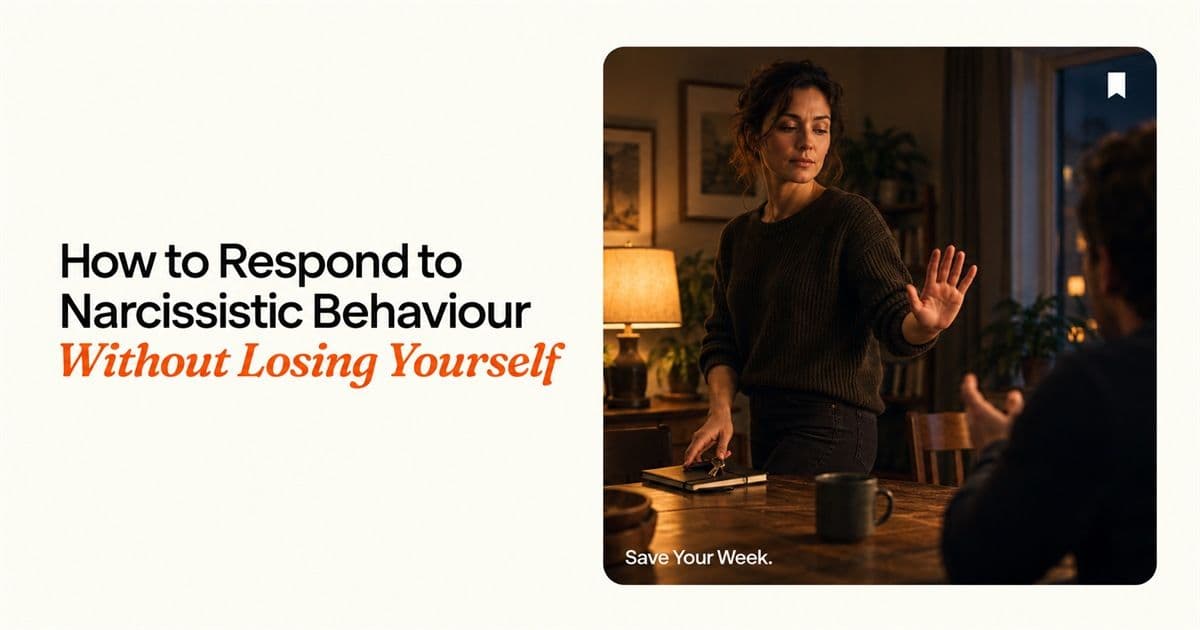
After months of blame, dismissal, or provocation, you may stop recognising your own responses. You shout. You investigate. You retaliate. Or you become controlling to regain reality. Now the question is not only what they are doing. It is what you are becoming. Learning how to deal with narcissistic behaviour starts there.
How to deal with narcissistic behaviour begins with what you can see. Do not start by diagnosing someone as a narcissist. A label may feel clear. It cannot replace evidence, boundaries, or professional care.
How to deal with narcissistic behaviour: why the label is too broad
Narcissistic traits, personality disorder, confidence, selfish acts, and abuse are not the same thing. Only qualified professionals can diagnose a personality disorder.
A systematic review and meta-analysis found a weak overall link between trait narcissism and intimate-partner violence. Results differed by subtype and form of violence. All measures were self-report. A seven-study project separated admiration from rivalry and found different relationship patterns.
The point is not “narcissism causes abuse.” One popular label hides real differences. No trait removes responsibility for harm. Precision helps when you practise how to deal with narcissistic behaviour. Keep the words plain. Look at acts. Look at impact. Look at safety. That is how to deal with narcissistic behaviour without getting lost in online checklists.
Describe what happens and what it costs
Who is affected? What does the person actually do? Insult, deny recorded events, punish disagreement, demand access, threaten, isolate, or break a limit? When does it happen? Where is there a record or a witness? Why does your current response feel necessary? How does that response affect your safety, sleep, work, and other relationships?
This Life Link crosses People, Peace, Sleep, Growth, Wealth, and sometimes physical safety. You may spend hours building a case. You may miss work. You may lose sleep. You may pull away from friends. The cost matters even if no diagnosis is ever made. Naming cost is part of how to deal with narcissistic behaviour in daily life. Keep the list short. Date. Act. Impact. Next step. That is enough to practise how to deal with narcissistic behaviour without living inside the conflict all day.
Protect yourself without copying the behaviour
“Be worse than them” can feel like power. In practice, retaliation may raise danger. It can also blur your records or pull you from your values. Restraint is not passivity. It can mean ending a talk, moving to writing, changing access, seeking legal advice, or leaving safely.
Difficult Conversations can help separate intent from impact. Set Boundaries, Find Peace helps turn a limit into follow-through. Neither book should force dialogue. Neither book should manage abuse without specialist support.
If there is coercive control, stalking, threats, or violence, prioritise confidential local support and emergency services where needed. A boundary talk may not be safe. That is still how to deal with narcissistic behaviour when safety comes first. Do not wait for a perfect label before you protect yourself. How to deal with narcissistic behaviour can mean leaving the room, ending the call, or asking for help today.
Protect the part of you most likely to get pulled in. If you over-explain, prepare one short sentence. If you investigate endlessly, decide what evidence you need and where it will be stored. If provocation leads to retaliation, leave the channel before you reply.
Review outcomes honestly. A boundary may cut contact, trigger pushback, or show the relationship cannot work. Success is not making them agree. Success is more safety, clarity, and alignment with your values.
Choose a boundary that does not need their agreement
Arguments about the label often never end. One person tries to prove narcissism. The other disputes the word. The original behaviour disappears. A boundary can work without that debate. That is a core skill in how to deal with narcissistic behaviour.
Name what you will do. “If the talk includes insults, I will end it.” “I will discuss money only in writing.” “I will not share my location.” These statements describe your Action. “You must admit you are manipulating me” depends on their agreement. How to deal with narcissistic behaviour works better when the plan does not need their confession.
Keep the consequence realistic and within your control. A boundary you cannot safely keep may create more risk. Get specialist advice when children, shared property, work, immigration, or violence are involved. Advice does not replace how to deal with narcissistic behaviour in the next hour. It supports the next safe Action.
Recover your own standards
Long conflict can make extreme behaviour feel normal. You may check constantly. You may lie to avoid reactions. You may use humiliation in return. Do not let their conduct set your only standard.
Write the standards you want to keep: factual talk, privacy, no threats, no public exposure, and no retaliation. If you break one, take responsibility and change access or support. Accountability does not mean pretending the original harm did not happen.
Reconnect with People and activities that existed before the conflict where safe. Isolation can make one relationship the only lens. Outside perspective restores proportion. Protect sensitive information. Choose supporters who understand safety. Balencia can keep Peace and People visible while you practise how to deal with narcissistic behaviour. When the week feels noisy, return to one fact and one limit. That is how to deal with narcissistic behaviour without turning every hour into debate.
Document for clarity, not obsession
A short record can support memory and advice: date, what happened, impact, witnesses, and key messages. Store it safely. Do not write speculative diagnoses as facts. Clear conduct records support better decisions later.
Decide the record’s purpose. If it supports legal, work, clinical, or safety action, ask a qualified professional what is useful and lawful where you live. If it is for personal clarity, review it at set times. Do not relive every event all day.
Documentation should reduce confusion. It should not become a full-time job. If recording raises danger or devices are monitored, seek specialist advice on safer methods. Immediate safety comes first. Cia can help place one boundary and one support contact in the week when how to deal with narcissistic behaviour feels urgent. Review the record once. Then choose the next Action. That rhythm keeps how to deal with narcissistic behaviour practical.
Your four-minute Action
Create one behaviour-impact-boundary record:
Behaviour: “On [date], the person said or did ___.”
Impact: “The immediate effect was ___.”
Boundary: “If it happens again, I will ___.”
Support: “The person or service I can contact is ___.”
Keep it factual. Store it safely. That page is how to deal with narcissistic behaviour in four minutes. If you cannot write a full page, write three lines. Behaviour. Impact. Boundary. That still counts as how to deal with narcissistic behaviour.
A coach can help organise a non-crisis pattern. A coach cannot diagnose the other person or replace emergency or abuse services. In Balencia, agency stays with you. Friends can help too when you describe conduct and impact instead of only the label. That keeps how to deal with narcissistic behaviour clear in support talks.
Frequently Asked Questions
How can I tell whether someone is a narcissist?
You cannot make a clinical diagnosis from online signs. Focus on repeated behaviour, impact, safety, and boundaries. Seek qualified assessment where needed. That focus is still how to deal with narcissistic behaviour.
Should I confront narcissistic behaviour?
Only if it is safe and useful. In abusive or escalating situations, confrontation can raise risk. Seek specialist guidance.
What if I became harsh in response?
Take responsibility for your behaviour. Do not use it to erase what happened to you. Stop unsafe contact, repair where appropriate, and get support.
Can a coach replace specialist help for how to deal with narcissistic behaviour?
No. A coach may support general reflection. Abuse needs specialist safety resources. Immediate danger needs emergency help for your location.
Sources
Stone, Patton, and Heen, Difficult Conversations
Stop Assuming What Someone Meant: Pause First
Acceptance vs Giving Up: Stop Fighting Reality
Tags
Did you find this article helpful?
About the author

Written by
Hamza Muqeem
Published · Updated
Put this into practice
Balencia turns advice like this into a plan that adapts to your week — with an AI coach that actually remembers what you told it.
Start free