On this page
Does Eating Late Affect Sleep? Look Beyond One Dinner
Does eating late affect sleep? Research links meal timing and sleep quality, but results are mixed. One late dinner cannot prove what caused one bad night.
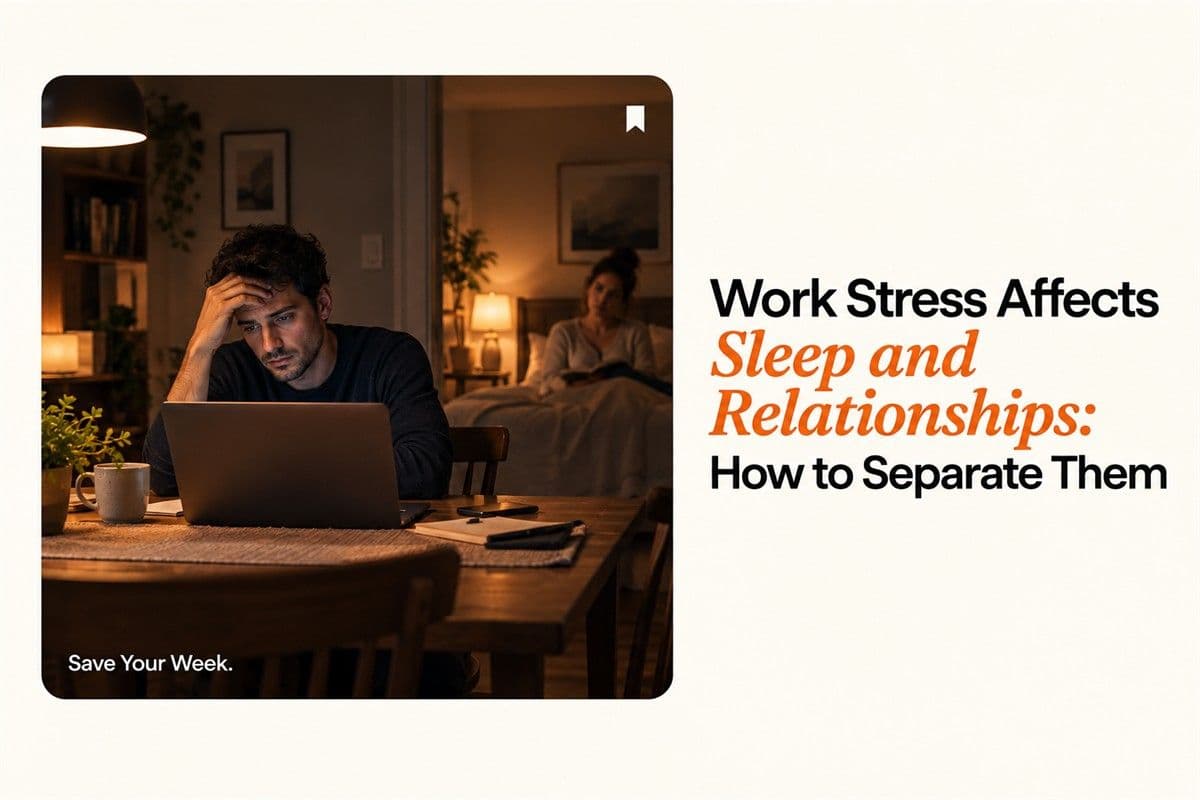
Dinner happened at 10:45. Laptop open, you ate, went to bed, and woke as though the night never settled.
By breakfast, you have a simple explanation: dinner ruined my sleep.
The timing may matter. But work ran late, coffee came later, and the room felt warm.
If your goal is to wake up feeling more rested, do not ignore dinner. Just do not put the whole night on one plate.
What Research Says About Eating Late and Sleep
Food and Sleep are different Chapters, yet the evening brings them together. When dinner moves, bedtime sometimes moves too. On a crowded day, both can lose planned space.
A 2024 review found preliminary links between meal timing, irregular eating, and sleep, but said the evidence was not strong enough for general sleep guidance. (PubMed) A 2026 observational study found some eating patterns associated with poorer sleep quality. Association alone cannot show that dinner caused the result. (Clinical Nutrition)
The research gives you a reason to review the two Chapters together. It does not justify blaming every poor night on dinner.
Why One Late Dinner Cannot Prove the Cause
After a rough night, a strict rule can feel reassuring: no food after 7:00. But it may not fit your work, health, culture, or faith observance.
The same late meal can sit inside different evenings. On Monday, it follows a calm day and an easy bedtime. On Thursday, it follows a deadline, a training session, two coffees, and an argument about tomorrow. Calling both nights “late dinner” hides the context that may help you choose what to change. Your review is not trying to win a case against food. It is trying to find the smallest repeated detail that deserves a fair test.
A 2024 review of six randomized trials found that time-restricted eating did not usually improve the sleep outcomes measured. The small, varied trials also produced mixed results. (PMC)
The useful conclusion is smaller: meal timing is worth reviewing, but a tighter eating window is not a guaranteed sleep fix. Look before deciding.
How to Review Dinner Timing and Sleep
Take the last three nights when you woke up feeling poorly rested. For each night, write down:
When you finished your last meal.
When you tried to sleep.
What changed from an ordinary evening.
How you felt the next morning.
Use the same language each time. “Rested” might mean you woke before the alarm and could start work without pressing snooze. “Poorly rested” might mean you woke several times or struggled through the first hour. Pick descriptions that make sense to you. Consistent notes make the nights easier to compare, even when the evenings were not identical.
Keep the third answer concrete. Perhaps work ended late, a child needed you, you trained, or you had caffeine. Check whether the meal appears alone or inside a crowded evening.
In an illustrative example, dinner ended after 10:00 on three nights: after work, the gym, and family time. The family evening still included restful sleep.
Dinner appears in all three records. The difficult sleep does not.
That does not clear dinner or blame something else. It shows that timing alone cannot explain the pattern yet.
Add one ordinary night when dinner happened at your usual time and sleep felt acceptable. This is not a perfect control night. It gives you a personal reference. Compare the gap between dinner and bed, but also compare caffeine, exercise, work pressure, room comfort, and interruptions. You may find that several difficult nights share a packed final hour. That observation can lead to a different experiment than an early dinner rule.
Test One Change, Not Your Whole Plan
Choose one experiment for a few comparable evenings. Prepare dinner earlier, move the meal when possible, or leave more time before bed.
Decide what you will observe before you begin. Keep it simple: time you finished eating, time you tried to sleep, night waking, and how the morning felt. Do not keep adding measures halfway through because one result looks disappointing. A short, repeatable note is more useful than a detailed log you avoid.
Change one thing. Keep the rest of the evening as ordinary as possible. Then note what happened without grading yourself.
If mornings feel different, you have a personal clue, not universal proof. If nothing changes, dinner timing may not deserve all your attention.
Compare the test with your own recent pattern, not someone else’s ideal evening. A shift that works on office days may fail on travel days or during Ramadan. That difference is useful. It tells you the plan needs to fit the kind of evening you have, without demanding a perfect schedule first.
Do not change a clinician-directed schedule, medication timing, or health plan without professional advice. Stop if tracking makes you anxious or rigid.
Food and Sleep Are Part of a Bigger Picture
The same method applies when a Wealth goal meets family costs, a Movement goal keeps losing the same evening, or a Faith commitment meets a crowded work schedule. Put the relevant Chapters together, find the repeated collision, and make one decision that fits your life.
That is more honest than treating every missed plan as a motivation problem.
What to Do Tonight
You do not need a new diet or a perfect sleep schedule tonight. You need enough information to choose one reasonable change.
Look at your last three difficult mornings now. Write down when dinner ended and what else changed the night before. Circle the detail that repeated most often, then test only that one next week.
Frequently Asked Questions
Does Eating Late Always Affect Sleep Quality?
No. Research supports a relationship worth studying, but it does not show that every late meal causes poor sleep. Schedule, health, stress, light, caffeine, and environment can share the same evening.
How Long Before Bed Should I Stop Eating?
There is no single cut-off for everyone. Work, health, medication, household schedules, and cultural or faith needs all matter. Choose a modest experiment that fits your circumstances, not a strict universal rule.
Can Eating Before Bed Cause Insomnia?
One late meal does not explain or diagnose insomnia. If trouble falling asleep or staying asleep continues and affects daily life, speak with a qualified health professional instead of assuming food is the cause.
What Should I Track When Comparing Dinner and Sleep?
Record when the last meal ended, when you tried to sleep, what was unusual, and how rested you felt. A short record you maintain is better than a detailed one you abandon.
When Should I Speak to a Health Professional?
Speak with a qualified health professional if sleep problems persist, affect daily life, or make it hard to stay safely awake. Loud snoring, gasping, or breathing difficulty also needs attention. The National Heart, Lung, and Blood Institute recommends telling a doctor if you regularly feel sleepy during the day, wake without feeling refreshed, or struggle with shift work.
Did you find this article helpful?
About the author

Written by
Hamza Muqeem
Published · Updated
Put this into practice
Balencia turns advice like this into a plan that adapts to your week — with an AI coach that actually remembers what you told it.
Start free