On this page
You leave the office. You sit in traffic. You walk through the door. Your mind is still at work.
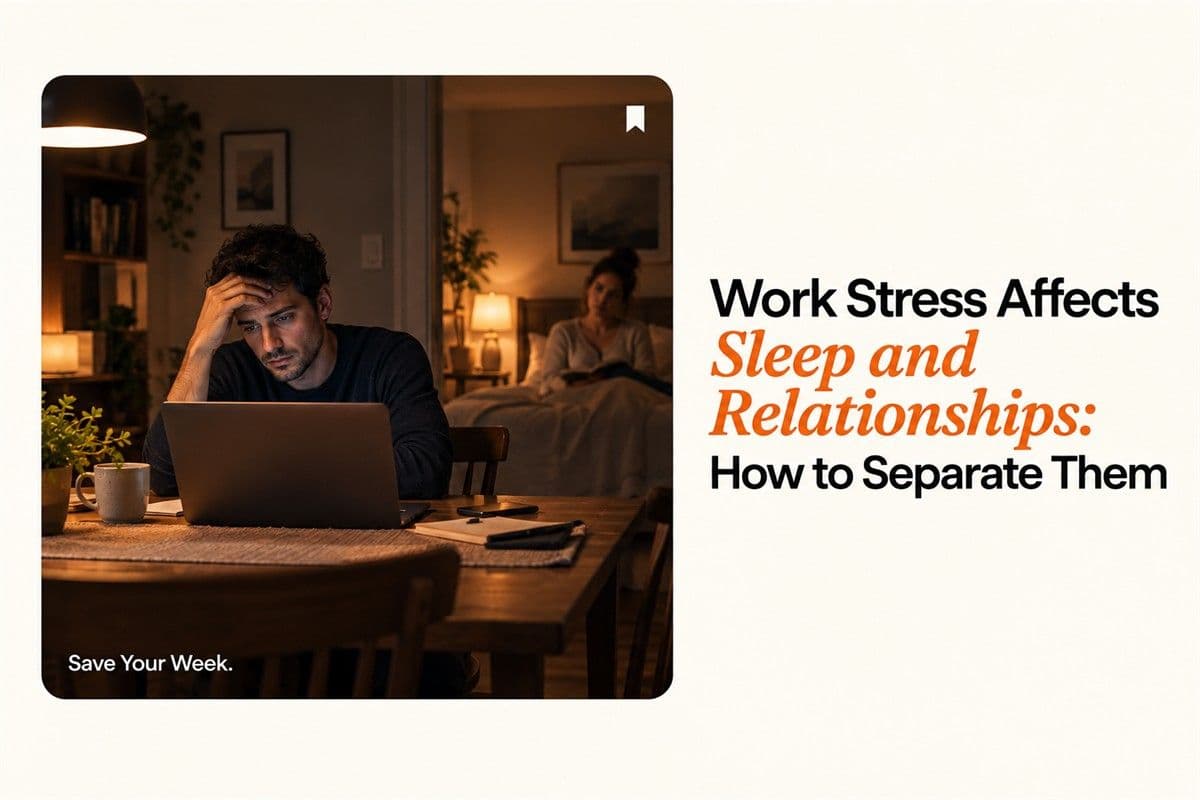
You snap at a simple question. You check messages at dinner. You replay the day in bed. This is how work stress reaches home. The tasks may stop. The tension does not. Work stress is still running in the background.
Work stress affects sleep and relationships when attention stays at work after the day ends. A short handover will not fix a harmful job. It can still protect dinner, sleep, and the people waiting for you.
Why work stress follows you home
Work stress is not only a hard meeting. It is open tasks, conflict, risk, and constant alerts. When those stay active, sleep and relationships take the cost.
Psychological detachment means your mind can leave work during non work time. A systematic review looked at detachment and wellbeing. A meta-analysis of interventions found detachment can improve with practice. Results vary by study.
Not every work thought is a problem. A useful idea on a walk is fine. Stuck rumination that blocks sleep is not. WHO guidance on mental health at work also points to the workplace itself, not only the worker.
Ask a few clear questions. Who feels the spillover: partner, children, friends, or your body? What is still open: unfinished work, conflict, or alerts? When does the switch fail? Where can a boundary start: before you leave, on the commute, at the door, or before bed?
A late day can link Growth, Peace, People, and Sleep. Work stress raises pressure. Dinner gets shorter. Sleep gets lighter. The next day feels harder. Watch the loop. Do not treat one bad night as proof of one cause. If work stress keeps repeating, the handover needs a fixed place in the week.
End the workday on paper
Alex Soojung-Kim Pang's Rest treats rest as something you design. One simple tool helps with work stress: a short end of day note.
Write three lines.
What is done.
What is still open.
When you will reopen it.
Without that note, your mind keeps looping so nothing is forgotten. A clear ending does not mean you stop caring. It means the work has a return time.
Then add one body cue. Change clothes. Wash your face. Take a short walk. Play one song before you enter the next role. Keep the cue small. Its job is to mark the end of work stress for the evening.
If the workload is unsafe or unfair, a ritual is not enough. You may need records, a manager, occupational health, or legal help.
Do not ask the people at home to finish the transition for you. Ten quiet minutes is fair. Silent anger is not. Try a plain line: I had a hard day. Give me ten minutes. Then I want to hear about yours.
How Balencia and Cia read work stress
Balencia keeps Growth, Peace, Sleep, and People on one timeline. The work record can show a late finish. A Peace check in can show tension after the commute. Sleep records can show night rumination. People notes can show a sharp reply at dinner.
You log the unfinished work and the evening that followed. Cia compares that with Sleep, People, and your schedule. Then Cia scores how much the spillover matters to the Goal you want to protect.
The score asks a practical question. Is work stress still open because of thoughts, feelings, or access to messages?
In one week, this may show up together:
alerts reopen the day after dinner;
bedtime thoughts hold unfinished tasks;
the first talk at home absorbs the tension;
no return time exists for open work.
Cia can place a four line close before you leave. It can protect Sleep from reopening the full work system. It can add one People Action that separates arrival from the first real talk. You still confirm the Action. If the workplace rewards constant access, calm habits alone will not fix work stress.
Three kinds of spillover
Work stress can spill in three ways.
Emotional spillover looks like irritation, worry, flat mood, or less patience. Cognitive spillover looks like replaying meetings or solving problems at night. Practical spillover is the open laptop, late call, or alert that keeps the job alive at home.
Each needs a different fix. A written close can hold the thoughts. A body cue can lower activation. Alert limits cut practical access. A hard work relationship may need records and workplace action.
Do not ask one ritual to fix all three. If evening calls are required, the issue is access, not weak willpower. Work stress can still hit sleep and relationships when the job never ends.
Protect the first twenty minutes
The handover often fails because two needs collide. One person needs quiet. Another has waited to talk, plan dinner, or pass on care work. With no plan, both feel ignored.
Agree a short arrival pattern when you can. Greet. Share only what is urgent. Take ten minutes apart. Then reconnect. Paid work should not own all recovery while unpaid work waits. Work stress should not set the tone of the whole evening.
If you live alone, the clash may be work stress versus basic care. Prep one easy Action before the day starts. Food ready. Walking shoes by the door. One written line that ends the day.
Keep tomorrow out of bed when you can. Write the next step earlier. Add the info you need. Add the return time. If insomnia or severe anxiety persists, get assessed. A close list cannot treat a sleep or mental health disorder.
Before you finish, write four lines: one done item, the next step for each priority, the return time, and one two minute home cue. After three days, check evening attention and sleep. Look for less work stress in the first hour at home.
Try Cia when work stress is still running the evening. Review Growth, Sleep, and People together. Then set a handover with a clear return time.
Frequently Asked Questions
Why can I not stop thinking about work?
Open tasks, conflict, risk, habit, and workplace demand can all feed work stress. No single reason fits everyone.
Does one evening email ruin recovery?
Not always. Check whether the check is short and chosen, or whether it reopens work stress and steals rest.
Can a commute help me switch off?
It can create space. It will not clear rumination on its own. Add a written close or a simple cue.
What if the workplace is the real problem?
Treat it as the real problem. Personal habits help recovery. They cannot fix unsafe demand, harassment, or chronic understaffing. That kind of work stress still harms sleep and relationships until conditions change.
Sources
Alex Soojung-Kim Pang, Rest
Are you working as an Emotional Escape: Ambition or Avoidance?
Need More Rest During a Difficult Time?
How to Deal with Narcissistic Behaviour Without Losing Yourself
Tags
Did you find this article helpful?
About the author

Written by
Hamza Muqeem
Published
Put this into practice
Balencia turns advice like this into a plan that adapts to your week — with an AI coach that actually remembers what you told it.
Start free