On this page
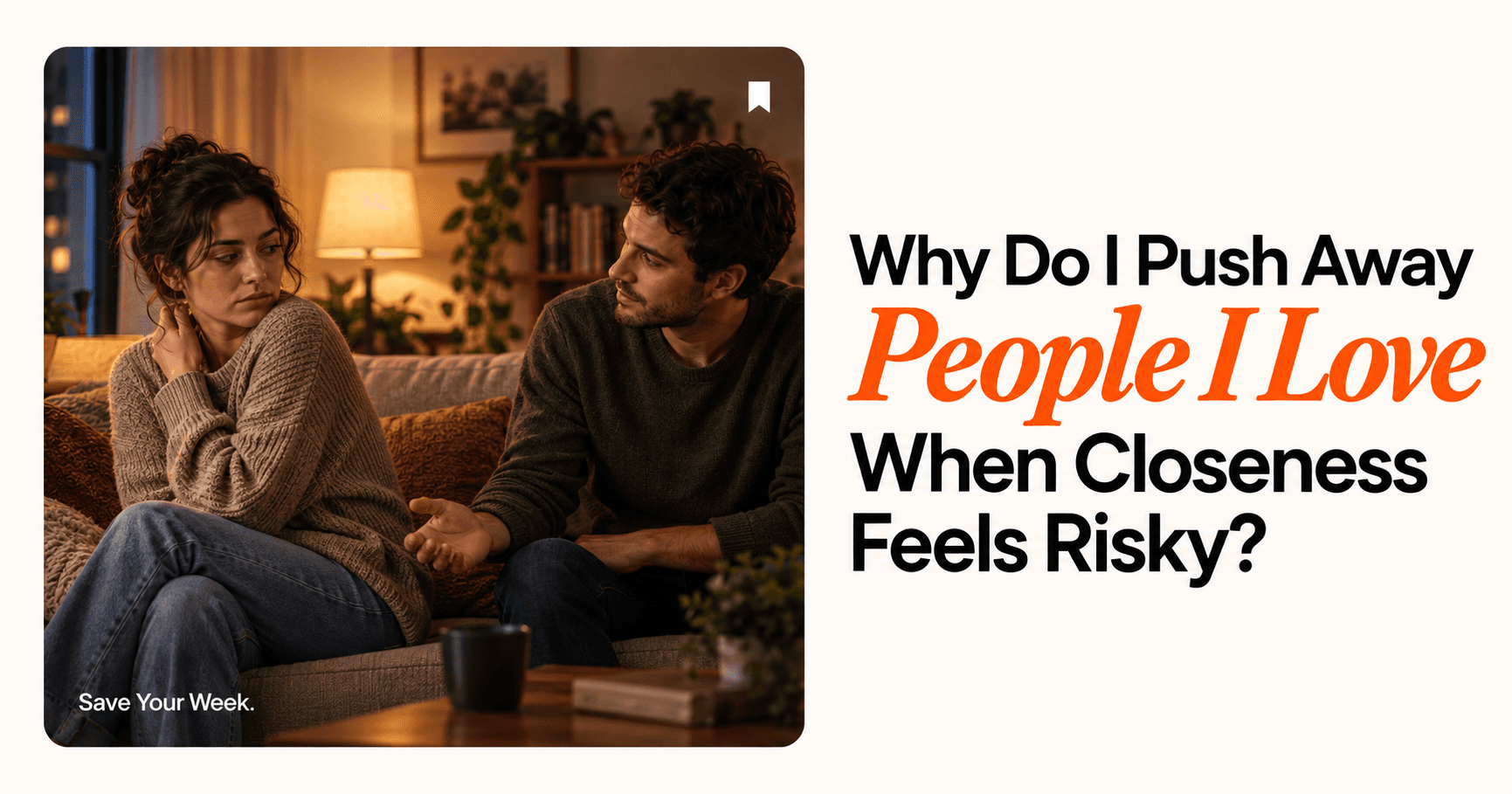
You want closeness until it arrives, and then you take longer to reply, find faults, start an argument, or insist you need no one. Distance brings relief, and later loneliness returns, which is why many people ask, "why do I push away people I love?"
Why do I push away people I love? Often the move is protection, because if you create the distance first, you do not have to wait for rejection. That idea may fit, but it still needs a test rather than becoming a hidden truth you accept forever.
Why do I push away people I love? Protection can become the problem
Closeness carries risk, because another person can misunderstand you, leave, or use what you share poorly. Caution is not a flaw. The issue is scale: is the protection fair to this relationship, or is it driven by an old fear that has not been checked in the present?
A review of disclosure in relationships shows that sharing and responses to sharing shape close bonds. A 2024 friendship study also looked at self-disclosure over time. These findings do not prove that openness always creates closeness, since safety, timing, culture, and the other person's response all matter. They also do not fully answer why do I push away people I love in your week.
Identify what you are protecting
Who do you push away, a partner, friend, family member, or anyone who becomes important? What do you do: withdraw, criticise, go quiet, test them, or share nothing? When does it start, after affection, conflict, a request, or a future plan? And where is distancing easiest: on text, at work, at the gym, or in silence at home?
Then ask why the behaviour feels useful, since it may protect dignity, independence, privacy, or certainty, and ask how well it still works after the first hour of relief. That review turns "why do I push away people I love" into a clear pattern.
This Life Link crosses People, Peace, Growth, and Sleep. An unread message may cut anxiety for an hour, but it can also create a night of rumination. Working late may avoid a hard talk, yet it can also grow distance. Watch the link across repeated days, and do not decide from just one evening.
Vulnerability can be small and safe
Sue Johnson's Hold Me Tight offers a therapy-informed lens for distancing and pursuit, though it is not a diagnosis or a substitute for care.
You do not have to jump from silence to full exposure. Safer vulnerability has a topic, a person, an amount, and a limit. It might sound like: "I want to disappear after hard talks. I need an hour. I will message you at eight." That keeps space without leaving the other person guessing, and it is a practical answer when you ask why do I push away people I love.
If sharing has been mocked or used against you, do not open up more with that same unsafe person, and boundaries and qualified support may fit better.
Then review the response: did they respect what you offered, get curious, dismiss you, or demand more? Did you return when you said you would? Vulnerability should create information, not become a test where you must share more to prove you care.
If you withdraw, repair the uncertainty where safe: "I went quiet. I am sorry I left you guessing. I can talk for ten minutes tomorrow." Own the impact, and do not promise more than you have.
Space and punishment can look similar
Both can look like silence, but their jobs differ. Space protects your capacity and names a return time when you can, while punitive withdrawal creates fear or compliance. You may not mean to punish, yet the impact can still hurt when you vanish and return only after the other person gives in.
A clearer pause names what is happening and when you will review. "I cannot talk well while I am this activated. I will message tomorrow by noon" protects space. If even that is unsafe, choose distance and support instead of a perfect script, which keeps "why do I push away people I love" from becoming self-blame without change.
Learn to receive vulnerability too
Some people focus on sharing more and miss how they respond when someone else shares. Do you jump to advice, minimise the feeling, change the subject, or use the information later in conflict?
Safe closeness is reciprocal, though it is not always equal in every moment. Receiving can mean listening, asking what they need, keeping confidence, and respecting a limit. You do not have to solve the feeling to stay present. If you only practise sharing and never practise receiving, you may still ask why do I push away people I love after every attempt.
If every serious talk drains both people, shorter talks can help. Balencia can keep People and Peace visible when you ask why do I push away people I love again. Notice reciprocity before you treat the whole pattern as proof that why do I push away people I love is your fixed identity.
Let present evidence update old predictions
If earlier closeness led to rejection or control, fear has a history, so do not argue with it in the abstract. Gather present evidence in small amounts, with people who have shown care.
Record what you shared, the response, the boundary, and what happened later. Safe repeats can open a new Action, and a harsh response also teaches you something. Cia can help place one small share and one review in the week when "why do I push away people I love" keeps returning. After that review, ask again why do I push away people I love in this specific relationship, not in every relationship you have ever had.
The goal is not to be open with everyone, but to choose closeness and distance with more accuracy. That choice is the useful end of why do I push away people I love.
Your four-minute Action
Choose one person who has shown enough care. Complete:
"The small truth I usually hide is ___. I would like to share only ___. What I need from you is ___."
Your Action may be asking for ten minutes, naming that you need space, or sharing one feeling, and the benefit is present evidence without abandoning privacy. That is how you move from "why do I push away people I love" to one next step. If the step feels too large, shrink it until you can still answer why do I push away people I love with one observable behaviour.
A coach can help pick a fair Action and review the response, though in Balencia, you decide what to share. Progress may be clearer distance as often as greater closeness. Either result still answers why do I push away people I love with evidence instead of a permanent label.
Frequently Asked Questions
Why do I push away people I love the most?
Close bonds carry higher stakes, and that can explain the intensity, though it does not excuse harm. Asking why do I push away people I love should lead to repair or safer space.
Is needing space the same as pushing someone away?
No. Space is clearer when it includes a reason, a fair timeframe, and follow-through where safe.
Should I tell my partner everything?
No. Privacy, consent, timing, and safety matter. Useful sharing is chosen and proportionate.
When should I seek help for why do I push away people I love?
Consider qualified support when distancing is persistent, causes distress, follows trauma, or keeps damaging relationships. Immediate safety needs local help.
Sources
Sue Johnson, Hold Me Tight
Work as an Emotional Escape: Ambition or Avoidance?
Is Social Media Shaping My Personality or a Performance?
Change Your Perspective When the Situation Cannot Change
Successful but Do Not Feel Successful: What Is Missing?