On this page
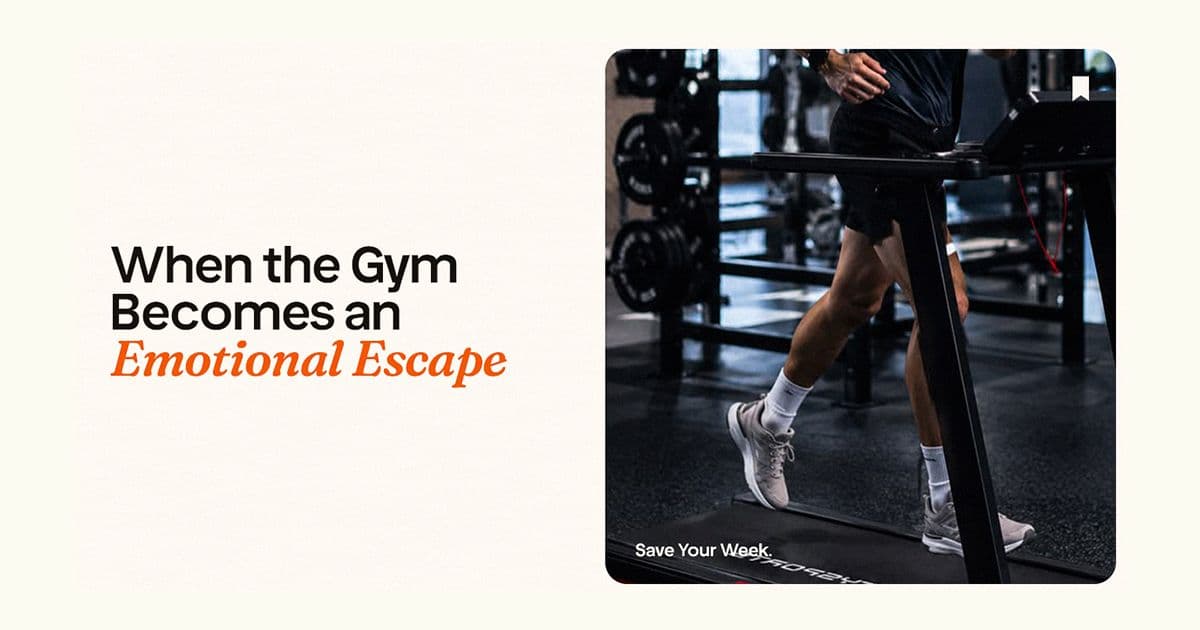
The meeting ends badly. You do not call the person you need to call. You do not sit with what happened. Instead, you add another hard session. You turn the music up. You tell yourself you are working on yourself. That is how gym as emotional escape often starts. The workout helps. It also postpones what still needs attention.
Exercise can protect health. It can support wellbeing too. The World Health Organization links regular activity to physical and mental health benefits. A large 2026 umbrella review found exercise useful as an extra tool for depressive disorders. That evidence supports movement. But it does not tell you why you trained today. It does not tell you what the session left unfinished.
Many people already use exercise to manage feelings. That is not a failure by itself. Gym as emotional escape becomes a concern when Movement is the only place feelings go. It is also a concern when Peace, Sleep, and People never get your attention afterward.
How gym as emotional escape starts during a hard week
Something lands first. It might be conflict at home, criticism at work, an empty evening, or a feeling you cannot name. Gym as emotional escape then supplies relief, focus, control, or numbness. Afterward, you do one of two things. You return to the unfinished matter. Or you find the next distraction.
Discipline is real when you are building strength or keeping a commitment. Gym as emotional escape begins when every difficult feeling leads to harder training. Nothing else in the week changes. Notice three things. What did you bring into the session? What changed while you trained? Can you now face the original issue with a clearer head? One intense session does not settle the question. A repeated week does.
When gym as emotional escape shows up across the week
Balencia keeps the effects of gym as emotional escape visible on one timeline. The workout record shows the hard session. A Peace entry, journal note, or mood record can show what arrived before it. Sleep and People records show whether recovery and conversation got attention afterward.
For this review, you record the difficult meeting. You also record the extra session that followed it. Cia compares these notes with your Movement, Peace, Sleep, and People records. Cia then scores how strongly gym as emotional escape matters to the fitness Goal you are protecting.
The score answers a practical question about gym as emotional escape. Is this week's training serving the Goal? Or is it also doing an emotional job that needs attention elsewhere?
When gym as emotional escape repeats, several parts of the week may shift together:
training volume rose after the same kind of conflict;
the conversation or decision that triggered the session still has no place in the week;
sleep shortened after late sessions;
evenings at home absorbed the unfinished feeling.
A healthy behaviour can still leave a gap. The gym helped. But the apology, the money talk, or the rest still needs a slot. Some signs matter here. Training instead of facing feelings is one. A late session after every hard conversation is another. These signs help Cia assess whether gym as emotional escape is replacing recovery and return.
Change what follows gym as emotional escape
Cia's conclusion about gym as emotional escape is specific. Keep the fitness Goal, and stop treating every emotional spike as a reason to add intensity.
The revised week gives gym as emotional escape a clear response:
keeps the sessions that still serve strength or consistency;
places a short Peace Action after the next hard workout, so the feeling that arrived with you is named before the day closes;
protects Sleep when a late session would borrow from recovery;
attaches one People Action to the unfinished conversation, on a day that still has capacity.
You may have read rising volume as rising discipline. The connected records tell a different story. They show Movement and Peace doing different jobs on the same days. Gym as emotional escape becomes easier to recognise when the score explanation is clear. It shows which records moved. It shows what Cia assessed. It shows why the next session stayed the same, became lighter, or made time for return.
You still confirm what happens next. Cia supports choice, follow-through, and Progress. It does not turn a workout log into a diagnosis. Forced exercise, disordered eating, injury, severe distress, and depression are different matters. They need real expert care.
What the next case of gym as emotional escape can show
The following sessions return to the same review. They bring effort, timing, and completion. They also bring Peace entries, sleep, and whether the original issue got attention. If training helps and the unfinished matter moves forward, gym as emotional escape may be giving way to a more flexible response. If every difficult feeling still leads to harder workouts, Cia revises again.
Before you treat any score about gym as emotional escape as settled, try this. After your next workout, write three facts. What did you bring in? What changed in body or mind? What is the smallest honest step you can take in under five minutes? Then decide whether the next hard session fits beside Sleep, Peace, and People.
Talk to Cia after your next hard session. Ask Cia to review gym as emotional escape across Movement and Peace. Then revise what comes after the workout without abandoning the Goal.
Frequently Asked Questions
Is going to the gym after a breakup unhealthy?
Not by itself. Movement may offer structure, social contact, and relief. Check whether it sits alongside sleep, food, support, and emotional processing. Or does it replace all of them? Gym as emotional escape is more likely when every feeling goes into training alone.
How do I know whether I am disciplined or avoiding emotions?
Look for flexibility and return. Can you adjust the session when your body needs rest? Can you revisit the issue afterward? Discipline serves a chosen Goal. Gym as emotional escape keeps the original matter out of reach.
Should I stop exercising while emotionally overwhelmed?
There is no single rule here. Choose activity that fits your health and your situation. Gym as emotional escape does not always make exercise unsafe. If exercise is forced, harsh, unsafe, or tied to severe distress, seek qualified help.
Can exercise replace therapy or medical care?
No. Exercise can be supportive, including as an extra tool in some researched settings. But gym as emotional escape cannot replace needed mental health or medical care.
Sources
How to Face Fear Without Forcing Yourself
Work Stress Affects Sleep and Relationships
How to Face Fear Without Forcing Yourself
Tags
Did you find this article helpful?
About the author

Written by
Hamza Muqeem
Published · Updated
Put this into practice
Balencia turns advice like this into a plan that adapts to your week, with an AI coach that actually remembers what you told it.
Start free